Disney Racism
Family movies not so innocent
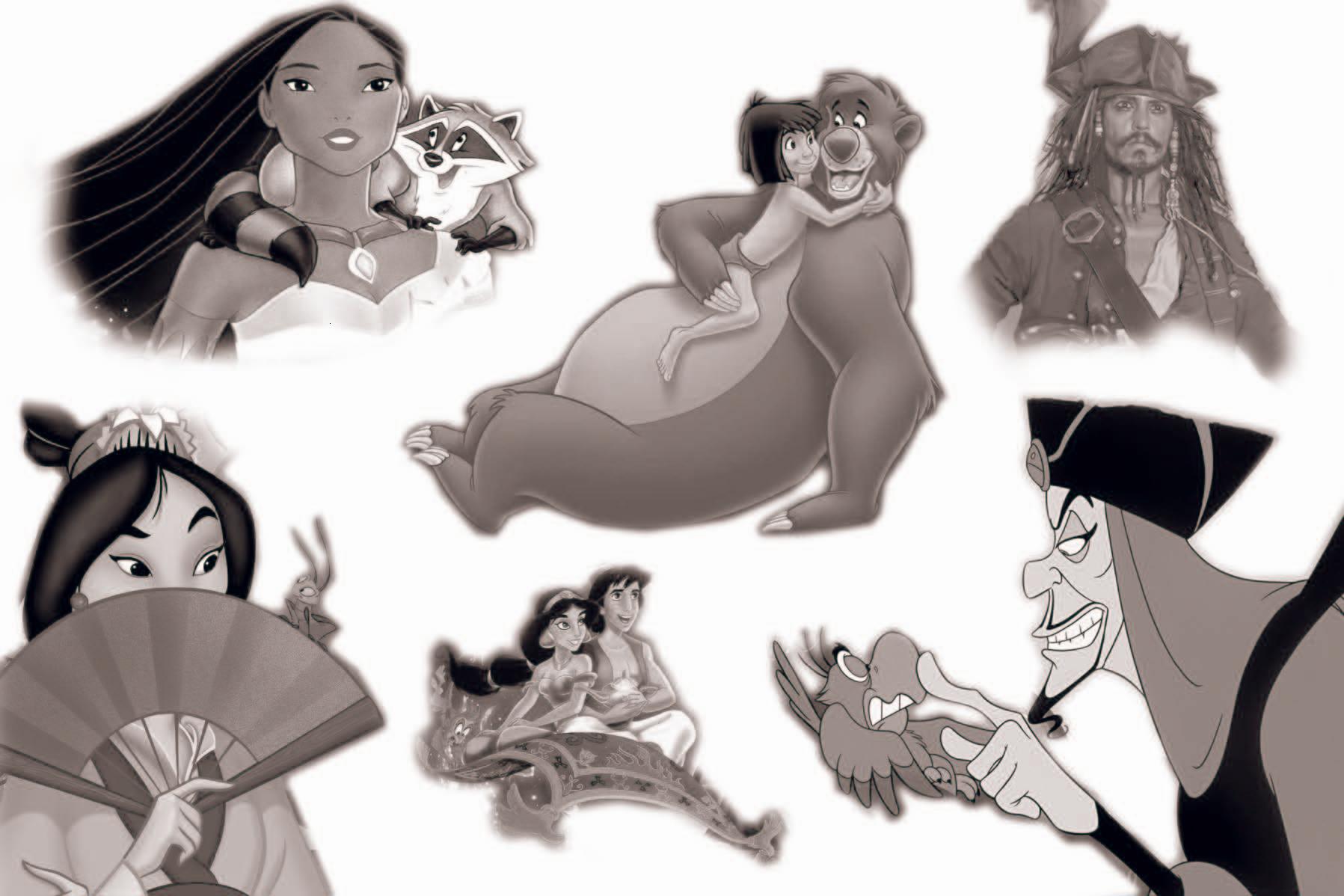
A collage of Disney characters accused of portraying racial stereotypes.
This summer I was extremely excited to see Pirates of the Caribbean: Dead Man’s Chest. However, when the 2½ hour summer blockbuster ended, I left the movie theatre unimpressed, mostly appalled by the blatant racism featured in the film.
The inaccurate portrayal of Caribbean indigenous peoples as “savage cannibals” was so boldly racist that the United Confederation of Taino People (UCTP) and the Garifuna American Heritage Foundation United (GAHFU) protested against Walt Disney Pictures and the release of “Pirates.” However, in the end, the Voice of the Carib people was essentially ignored by Disney and the film underwent no alterations.
When asked why Disney would disregard such strong protests in an interview on Uprise radio station, Cheryl Noralez, president and founder of GAHFUA, stated, “I believe that Disney was more interested in making profit off the film instead of the way we felt about the racial stereotype of the Carib people.”
Unfortunately, it is no surprise that Pirates of the Caribbean: Dead Man’s Chest is not the only production based upon Disney’s preoccupation with profit rather than cultural respect.
“Oh I come from a land, from a faraway place where the caravan camels roam. Where they cut off your ear, if they don’t like your face; it’s barbaric, but hey! It’s home…” These lyrics from the song “Arabian Nights,” were used as the opening lines to Disney’s 1993 creation, Aladdin. As the movie’s narrator rides on a camel into the desert night, he sings this song to introduce the country in which Aladdin takes place. The narrator ignorantly depicts the country as uncivilized and violent, and states that it’s normal in Arab daily life to do something as sadistic as disfiguring a disliked person.
Although Disney modified the opening song due to complaints voiced by Arab populations and organizations (such as ABIM) across the globe, the change took place after the movie hit stores; and it was only the reference to mutilation that was changed, not the reference to barbarianism. Also, like most Disney films, most of the stereotypes don’t play out in the first scene of Aladdin, but permeate the entire movie; consider that Aladdin and Princess Jasmine, the protagonists of the film, speak perfect American-English, whereas the evil characters, such as Jafar, speak English with heavy accents. It is also noted that similar to the villain Scar in The Lion King—who is coloured a dark brown instead of a golden yellow like all the “good” lions – Jafar is more darkly coloured than all the other characters.
Sadly, 100% of the Jarvisistes I interviewed found absolutely nothing remotely stereotypical, racist or prejudiced about any Disney film, including Pirates of the Caribbean. The only complaints were that “the main characters are always drop-dead beauties” or “the endings are always happy.” This is not only disappointing, but proof that Disney has desensitized our generation's attitudes towards cultural stereotypes.
This subtle manipulation is very much exemplified in their 1995 film, Pocahontas. By denying historical and cultural assistance by the Powhatan Nation, and basing the entire movie on their own version of the Pocahontas and Captain Smith love affair, Disney not only disfigured history, but reconstructed it, giving an inaccurate account of the story and its people.
“Our Chief [Chief Roy Crazy Horse] who is no longer with us, was the one who contacted Disney and pointed out all the errors of the movie,” says Lorraine Parker Greene, Powhatan leader. “Disney’s response was that for the movie’s sake, they were going to take some ‘liberties.’ After hearing this, our Chief wrote a paper commenting on Disney’s purposeful misinterpretation of the Pocahontas story.”
The paper, states that the Disniefied Captain John Smith was a sensitive and compassionate
man, when in reality he was an abrasive and swashbuckling mercenary soldier. In addition, the ‘real’ John Smith reported that during his winter with Chief Powhatan and his people, he was kept comfortable and was treated like an honoured guest; whereas Disney portrayed John Smith’s contact with the Natives as brutal and harsh to appeal to the cultural ego of America. This distortion of events is a perfect example of Disney’s incredible neglect to respectfully authenticate another culture they choose to portray.
And given Disney’s large role within media of all sorts, it must be held accountable for the content of its films. We can no longer support a corporation
that continues to put racism into its movies despite long history of protests, complaints, and criticisms towards the racist, prejudiced and stereotypical
aspects
 JargOnline 2006 - 2007